Culture

Chicago takes the global stage for International Jazz Day

Chicago, a historic jazz center and the birthplace of many jazz greats, serves as the Global Host City for this year’s International Jazz Day (30 April). The fifteenth edition of the observance features a record number of artists—including Dee Dee Bridgewater, Jacob Collier, Kurt Elling, Renée Fleming, Herbie Hancock, Marcus Miller, and many others—in a Global Concert streamed worldwide via UNWebTV, UNESCO, and YouTube. Beyond the concert, UNESCO encourages global celebrations, with schools, cultural venues, communities, broadcasters, and festivals hosting thousands of jazz events worldwide.

Terence Blanchard, a jazz trumpeter, performing at a previous International Jazz Day event at the UN Headquarters in New York.
Photo:UN/Devra Berkowitz
03-01-2024_Unsplash_tanker (AYzQINjQdmc8PeIHLJG7)

Hormuz crisis strangling global economy, Guterres warns, demanding solutions to end stalemate

30 April 2026 — The escalating crisis in the Strait of Hormuz could push tens of millions into poverty, trigger a surge in global hunger and even tip the world towards recession, the UN Secretary-...

2015 nuclear deal ‘no basis’ for any new agreement with Iran

29 April 2026 — The 2015 nuclear accord with Iran cannot be the starting point for a new agreement with the country, the head of the International Atomic Energy Agency (IAEA) said on Wednesday in...

UN rights chief warns of escalating crackdown in Iran amid conflict

29 April 2026 — The UN’s top human rights official warned on Wednesday that Iranians’ rights are being eroded in “harsh and brutal ways,” citing a surge in executions, mass arrests and alleged...

UN Sustainable Development Goals

17 Goals to transform our world

The Sustainable Development Goals are a call for action by all countries — poor, rich and middle-income — to promote prosperity while protecting the planet.

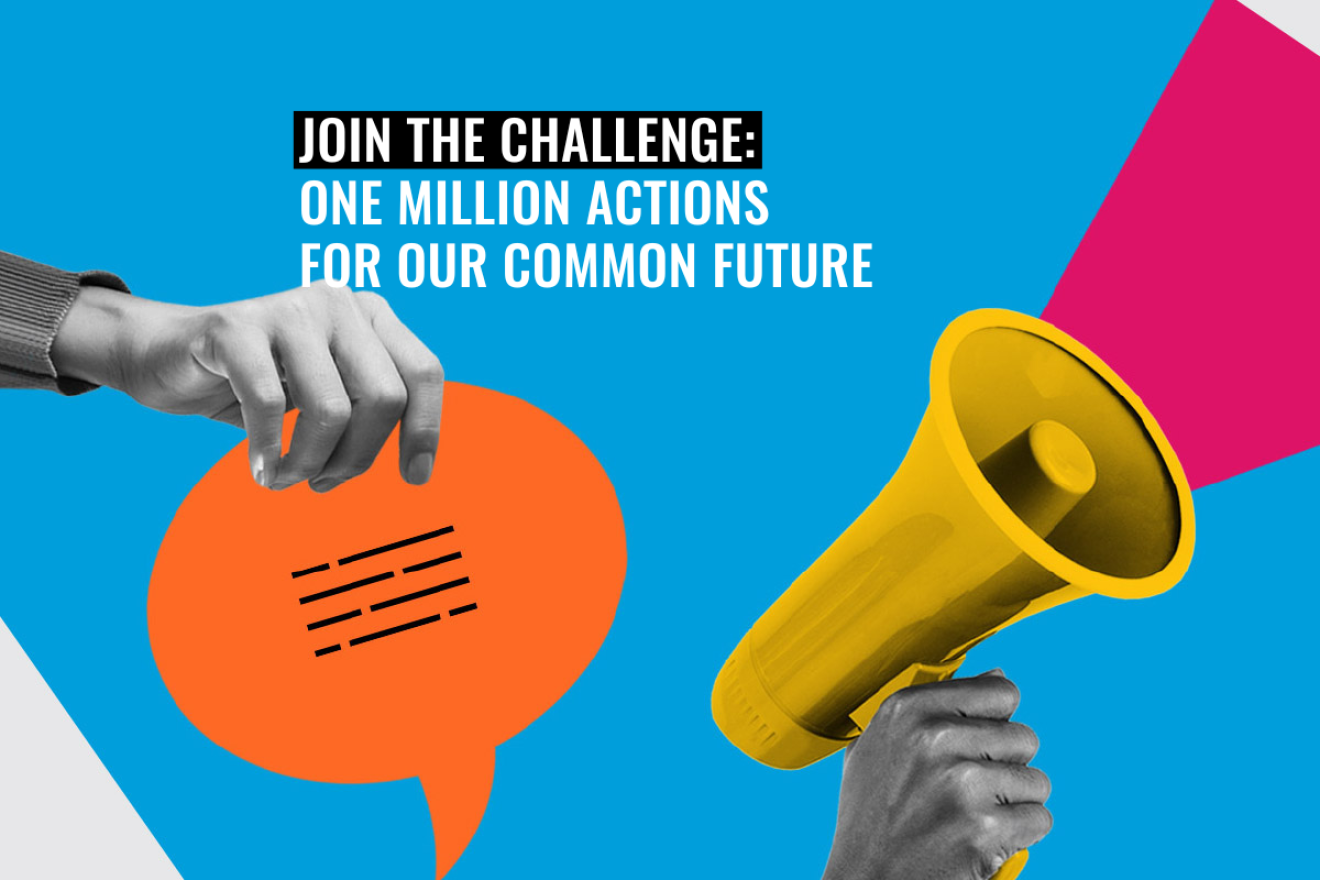
hands holding megaphone and speech bubble

The Goals can improve life for all of us. Cleaner air. Safer cities. Equality. Better jobs. These issues matter to everyone. But progress is too slow. We have to act, urgently, to accelerate changes that add up to better lives on a healthier planet. Find new inspiring actions on the app and at un.org/actnow.

Today, half the world is under 30, and this generation is a powerful force for peace. The UN "Hear Us. Act Now for a Peaceful World" campaign, launched on the International Day of Peace, aims to include, invest in, and partner with young people to build lasting peace. 

As a global platform for dialogue, the ECOSOC Youth Forum brings together young people, Member States, the UN system, and other partners to exchange ideas, showcase innovative solutions, and strengthen youth engagement in accelerating progress on the SDGs. Find the ECOSOC Youth Forum programme here.

Partnerships for the Goals


Goal 17: Partnerships for the Goals

Revitalize the global partnership for sustainable development


More from the
United Nations

Featured stories from across the United Nations and our world-wide family of agencies, funds, and programmes.

A nurse administering a vaccine to an infant while his mother looks on. WHO, Health

Hepatitis deaths Fall, but world off track to meet 2030 elimination goals

Global efforts to curb viral hepatitis are reducing infections and deaths, but progress is too slow to meet 2030 targets, a new World Health Organization (WHO) report warns. Hepatitis B and C, which cause 95% of hepatitis deaths, killed 1.34 million people in 2024, while 1.8 million new infections occurred. Since 2015, new hepatitis B infections fell 32% and hepatitis C deaths 12%, and child hepatitis B prevalence dropped to 0.6%. Yet 287 million people live with chronic infection, most untreated, and transmission persists due to low vaccination, unsafe injections and limited harm reduction. WHO urges faster scale-up of prevention, testing and treatment efforts worldwide.

City hit by a heatwave. WMO, Climate Change

From the Mediterranean to the Arctic, Europe faces record heat in 2025

Heat swept across Europe in 2025 like never before, reaching from sun‑baked southern coasts to places near the Arctic Circle that rarely see such extremes, warns a new report by the World Meteorological Organization. About 95% of Europe was warmer than normal. Long heatwaves hit even Arctic areas, with temperatures above 30°C. Seas were the warmest ever, and many wildfires burned a record area. Glaciers across Europe kept shrinking, snow cover fell well below average, and major ice loss was seen in Iceland and Greenland. Many rivers had low water for most of the year. The report warns these changes are harming people and nature and shows Europe is warming faster than any other continent.

Several rows of lettuce growing inside a greenhouse. FAO, Agriculture and Food

No soil, no problem

On a small family farm in southern Grenada, lettuce is thriving without soil—and increasingly without fear of the weather. Faced with erratic rainfall and growing climate uncertainty, Roger and Josanne Benjamin turned to hydroponics, a method of growing plants with their roots suspended in a flowing mix of water and nutrients instead of soil. With support from a project implemented by the Food and Agriculture Organization of the United Nations, their early experiment evolved into a solar-powered, climate-smart system. The results reach beyond higher yields: water use is far lower, production is more stable, and the work is less physically demanding. Their experience is now inspiring others nearby.

Food Aid, WFP

Hunger crisis deepens in South Sudan

UN agencies warn that 2.2 million young children are suffering from acute malnutrition, and 7.8 million people are at risk of hunger.

Trade and Commerce, UNCTAD

Hormuz disruption shows why early-warning data matters

New UNCTAD dashboard tracks risks across shipping, energy, food and finance as shocks from the Strait of Hormuz spread through the global economy.

Women and Gender Equality, UN Women

Women working in Gaza share their stories

In Gaza, there is no safe place to work – or to live. Women on the frontlines of the response are working under extreme hardship, insecurity and repeated attacks. 

Women and Gender Equality, UNFPA

Survivors of sexual violence rebuild their lives

Women and girls in the Democratic Republic of the Congo who have endured sexual violence share their stories of survival, recovery and empowerment.

What we do

Due to the powers vested in its Charter and its unique international character, the United Nations can take action on the issues confronting humanity in the 21st century, including:

Structure of the
United Nations

The main parts of the UN structure are the General Assembly, the
Security Council, the Economic and Social Council, the Trusteeship Council, the International Court of Justice, and the UN Secretariat. All were established in 1945 when the UN was founded.

The General Assembly is the main deliberative, policymaking and representative organ of the UN. All 193 Member States of the UN are represented in the General Assembly, making it the only UN body with universal representation.

The Security Council has primary responsibility, under the UN Charter, for the maintenance of international peace and security. It has 15 Members (5 permanent and 10 non-permanent members). Each Member has one vote. Under the Charter, all Member States are obligated to comply with Council decisions.

The Economic and Social Council is the principal body for coordination, policy review, policy dialogue and recommendations on economic, social and environmental issues, as well as implementation of internationally agreed development goals.

The Trusteeship Council was established in 1945 by the UN Charter, under Chapter XIII, to provide international supervision for 11 Trust Territories that had been placed under the administration of seven Member States, and ensure that adequate steps were taken to prepare the Territories for self-government and independence.

The International Court of Justice is the principal judicial organ of the United Nations. Its seat is at the Peace Palace in the Hague (Netherlands). It is the only one of the six principal organs of the United Nations not located in New York (United States of America).

The Secretariat comprises the Secretary-General and tens of thousands of international UN staff members who carry out the day-to-day work of the UN as mandated by the General Assembly and the Organization's other principal organs.

Learn more

Podium of the General Assembly Hall seen from below with the gold wall and the golden UN logo behind

The United Nations process to appoint the next Secretary‑General continues on 21 and 22 April with interactive dialogues guided by the principles of transparency and inclusivity. Join the conversation and follow the live interactive dialogues with the candidates on UN WebTV: Michelle Bachelet Jeria (21 April, 10 a.m. EDT), Rafael Mariano Grossi (21 April, 3 p.m. EDT), Rebeca Grynspan Mayufis (22 April, 10 a.m. EDT), and Macky Sall (22 April, 3 p.m. EDT).

Climate change is the defining issue of our time and now is the defining moment to do something about it. There is still time to tackle climate change, but it will require an unprecedented effort from all sectors of society.

Women at UN CSW63 Side Event - “Take the Hot Seat”. Photo: UN Women/Ryan Brown

Women and girls represent half of the world’s population and, therefore, also half of its potential. Gender equality, besides being a fundamental human right, is essential to achieve peaceful societies, with full human potential and sustainable development.

UN Secretary-General António Guterres is greeted on his visit to the Central African Republic

While global poverty rates have been cut by more than half since 2000, one in ten people in developing regions still lives on less than US$1.90 a day — the internationally agreed poverty line, and millions of others live on slightly more than this daily amount.

Watch and Listen

Video and audio from across the United Nations and our world-wide family of agencies, funds, and programmes.

The Village Vanguard is the oldest jazz club in New York City, founded by Max Gordon in 1935. The club worked as a platform to present all kinds of cultural and political events and became primarily a jazz music venue in 1957. Since then, the club has hosted many renowned jazz musicians from around the world, including Sonny Rollins, John Coltrane, Bill Evans, and Thelonious Monk. UN News and UN Video interviews the current owner of the club, Deborah Gordon and three-time Grammy Award-winning American jazz pianist Sullivan Joseph Fortner for the International Jazz Day on 30 April. The Day was proclaimed by UNESCO in 2011 to celebrate the power of jazz as a force for peace, dialogue and mutual understanding.

How intellectual property powers Olympic athletes

NBA legend and triple Olympic medallist Pau Gasol – now Chair of the IOC Athletes' Commission – explains the role intellectual property rights play in making the Olympic Games and other sports events possible.

Protecting rhinos with nuclear science

In South Africa, scientists are addressing poaching with an innovative approach: using safe radioactive isotopes as invisible markers in rhino horns, enabling authorities to detect and trace them at borders.

UN Podcasts

medical personnel working on patient

Psychosocial risks at work: The invisible threat to workers’ health

In this episode of the ILO Future of Work podcast, Manal Azzi explains how psychosocial risks such as long working hours, job insecurity and workplace bullying affect workers’ health, and what can be done to create healthier working environments worldwide.

Latest Audio from UN News

The United Nations in Pictures

Images from across the United Nations and our world-wide family of agencies, funds, and programmes.

A man inspecting a crop in a field.
Photo:UNDP Zimbabwe/ Pylaia Chembe

What is a just transition and why is it important for climate action?

The concept of just transition refers to integrating social justice and equity principles, processes and practices in climate action. As countries move away from fossil fuels to fight climate change, some jobs and communities are at risk of being left behind. A just transition focuses on protecting workers, creating new green jobs, and helping communities adjust. It calls for training, social support, and clear plans so people can find new work and build better lives. This approach also gives communities a voice in decisions that affect them. By putting people at the center, a just transition makes climate action fairer, stronger, and more likely to succeed for the long term.

A female chef holding a microphone with food containers in the foreground.
Photo:IOM/Ploy phutpheng

A bowl of rice salad tells a story of Myanmar in Thailand

In Thailand, a simple bowl of Myanmar rice salad carries memories of home, family, and survival. For Flora Aye, a vegan chef from Myanmar, rice is more than food – it is part of daily life and culture. Growing up, her family cooked rice in large batches and never wasted leftovers, turning them into rice salad using whatever ingredients were available. Now living in Bangkok, Flora shares this dish with Thai students, using cooking to pass on Myanmar traditions and values. The rice salad reflects resilience, care, and the importance of making the most of limited resources, while helping keep Myanmar’s cultural identity alive far from home.